

“The media’s the most powerful entity on earth. They have the power to make the innocent guilty and to make the guilty innocent, and that’s power. Because they control the minds of the masses…If you aren’t careful, the newspapers will have you hating the people who are being oppressed and loving the people who are doing the oppressing.”
— Malcolm X
Just the other day, my mother was engrossed in the Netflix & Fusion limited series, Who Killed Malcolm X? I watched some of it, but I knew it would only piss me off. Malcolm X is dear to me because I was born on his birthday and learned so much about him growing up, including his recognition of issues within the Black community and even something to which he had dedicated his entire life and family.
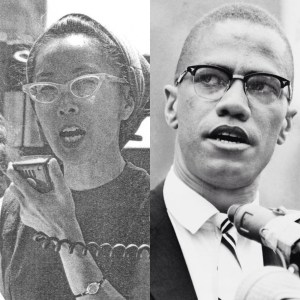
For those of you who don’t know, it’s been common knowledge that Malcolm X was killed by other Black people after he left the Nation of Islam. Seriously, if I were to ask my Southern family, most of whom lived through extreme racism in Mississippi, they would unanimously say that the Nation of Islam killed Malcolm X. No one knows the details, but it’s a common agreement. Even if the United States government was in on it, the agreement had to be made with people who were able to get somewhat close to Malcolm X. If you watch the limited series, there are quite a number of details that barely (if they do) make it into the history books.

That’s why I find it tragic that we still do this to each other, particularly in academia and in film. Why do we erase people who are involved or, you know, actually did the work? Why is it that Black people and Black bodies are still the butt end of the joke—worldwide? What happened to Third World solidarity? Why do people not know about the Red Guard, modeled on the Black Panther Party(1), and other Asian Americans not of Chinese-descent who protested with the phrase “Yellow Peril Supports Black Power”? Why is Yuri Kochiyama completed erased from Spike Lee’s X? Why are people unaware of Paul Robeson, Zora Neale Hurston and other Black creatives’ involvement in speaking out against the U.S.’s foreign policy in Asia and for Korea’s independence from Japan?
I’ve spent years deconstructing cultural representations in media and studying Africana Studies and only recently did I discover DuBois’s travels to China or Richard Wright’s The Color Curtain. Where were these things in my Africana Studies classes? Why do we miss these things, especially during Black History Month?
And this is why we have stereotypes that still persist as real representations of people, to the point where even those within believe them sometimes. All I ask is that we question some of these things—even if they are made by “us.” Just question and rethink.
And always stay blessed. ; )
______________________________________________________________________________
- Bill V. Mullen, “Persisting Solidarities: Tracing the AfroAsian Thread in U.S. Literature and Culture,” in AfroAsian Encounters: Culture, History, Politics, ed. Heike Raphael-Hernandez and Shannon Steen (New York: New York University Press, 2006), 248.


 my2baek1.com